Process

Design without function is just form

My process moves from discovery and strategy through design, validation, and delivery, grounded in proven best practices. I work closely with teams to understand users, define the right problems, align with business goals, and explore solutions quickly. Through iteration, testing, and refinement, I turn insights into clear, scalable experiences that are practical to build and designed to create lasting value.
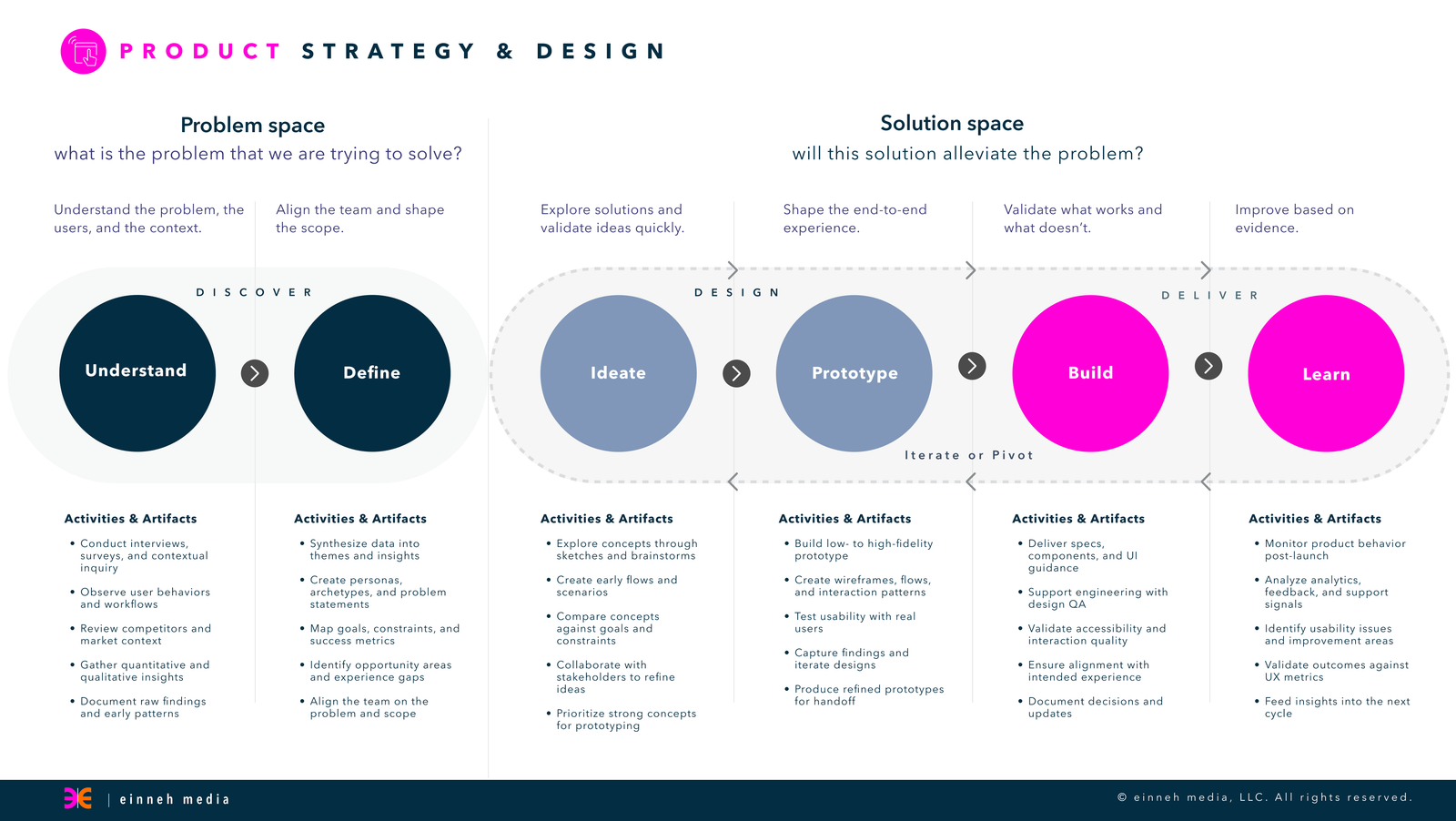
Product Strategy & Design process diagram. Problem space (what is the problem we are trying to solve?): Discover through Understand and Define. Solution space (will this solution alleviate the problem?): Design through Ideate and Prototype, then Deliver through Build and Learn, with a loop to iterate or pivot. Each stage lists activities and artifacts, such as user interviews and journey mapping in Understand, problem statements and success metrics in Define, sketches and early flows in Ideate, high-fidelity prototypes and usability tests in Prototype, specs and design QA in Build, and analytics and post-launch feedback in Learn.
Scroll sideways or tap to open full size
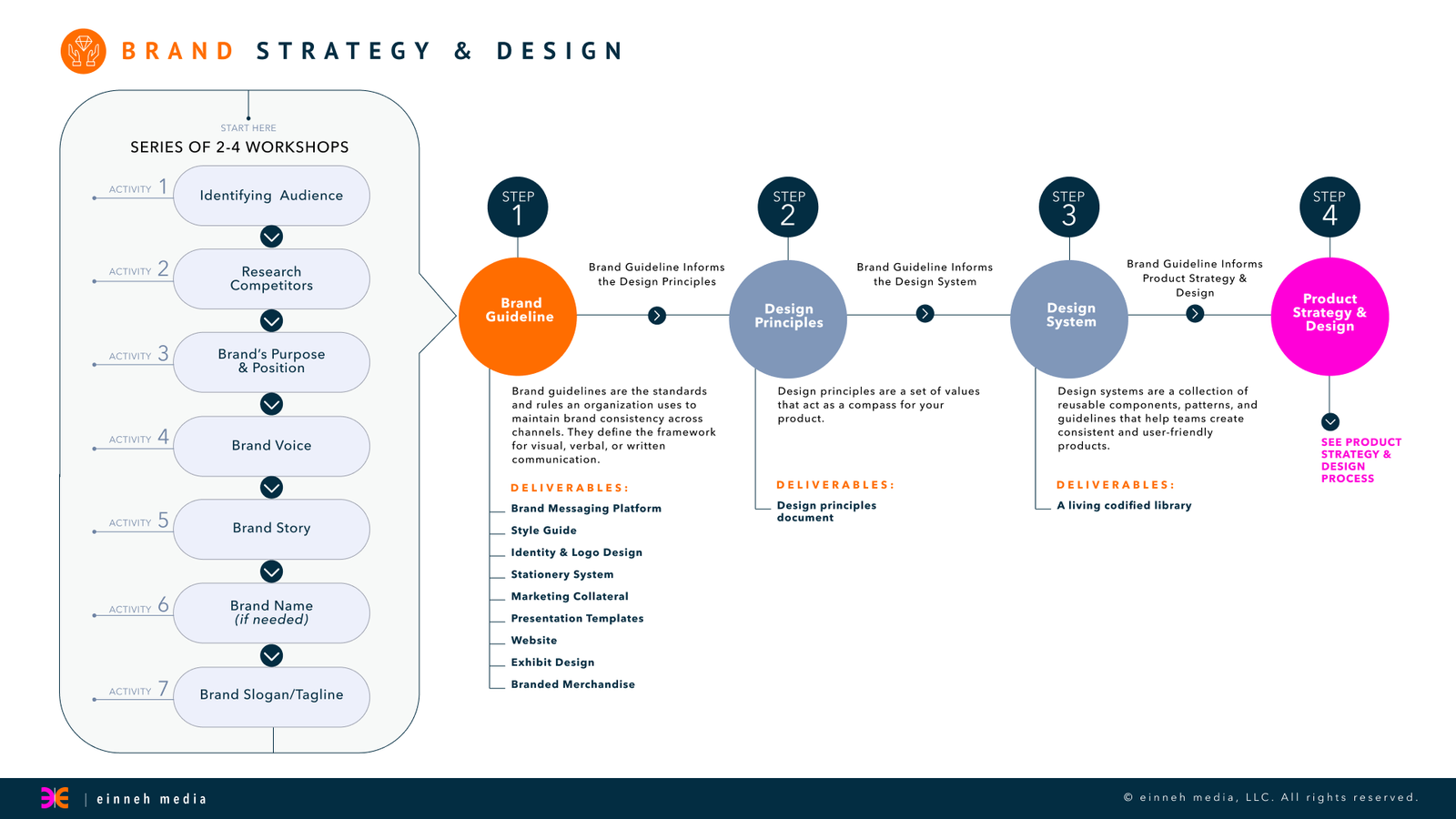
Brand Strategy & Design process diagram. A series of 2 to 4 workshops covers seven activities: identifying the audience, researching competitors, brand purpose and position, brand voice, brand story, brand name if needed, and brand slogan or tagline. These feed four steps: 1, Brand Guideline, with deliverables including a brand messaging platform, style guide, identity and logo design, stationery system, marketing collateral, presentation templates, website, exhibit design and branded merchandise; 2, Design Principles, delivered as a design principles document; 3, Design System, a living codified library; and 4, Product Strategy & Design.
Scroll sideways or tap to open full size
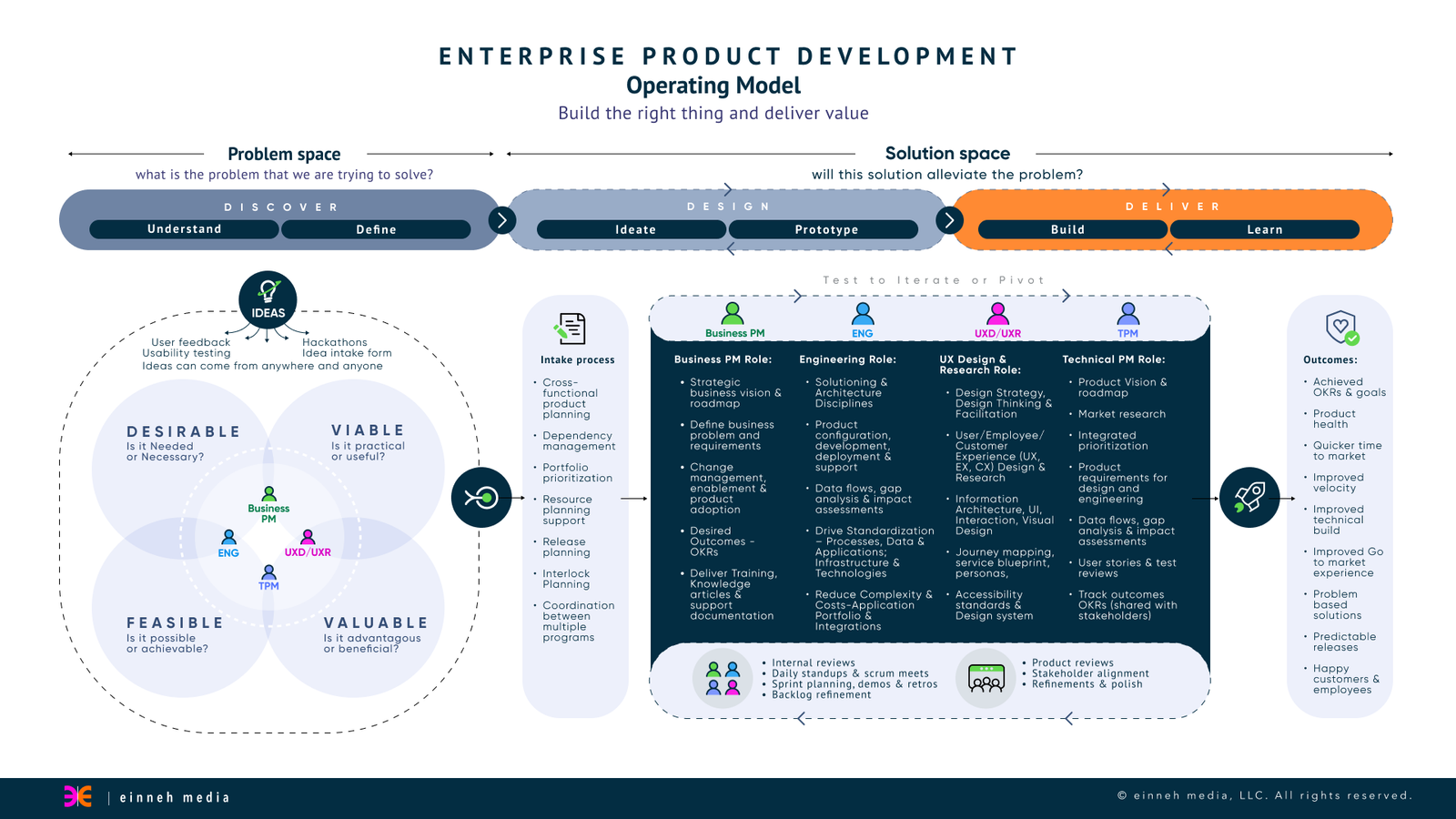
Enterprise Product Development operating model: build the right thing and deliver value. Ideas from user feedback, usability testing, hackathons and intake forms are screened for being desirable, viable, feasible and valuable by the business PM, engineering, UX design and research, and technical PM. An intake process covers planning and prioritization, then the four roles collaborate through Discover, Design and Deliver with a test-to-iterate-or-pivot loop, internal reviews, daily standups, sprint planning and product reviews. Outcomes include achieved OKRs and goals, product health, faster time to market, improved velocity and technical build, predictable releases, and happy customers and employees.
Scroll sideways or tap to open full size